Podcast
Episode 32: Why Slower, Smarter Travel is Defining Luxury’s Next Era
At its core, the next era of luxury travel appears to be focused on helping travelers feel more connected—and less overwhelmed—every step of the way.
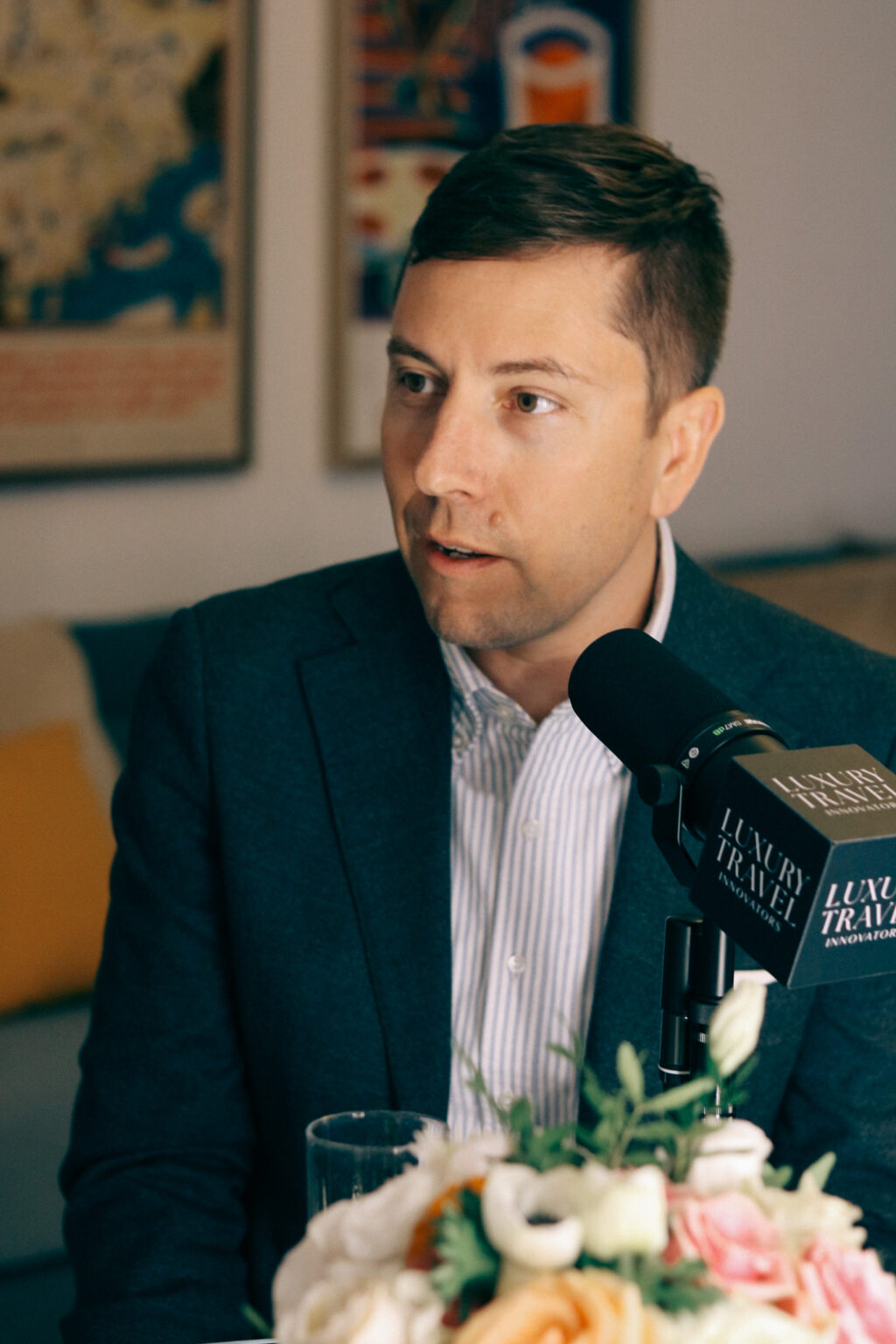
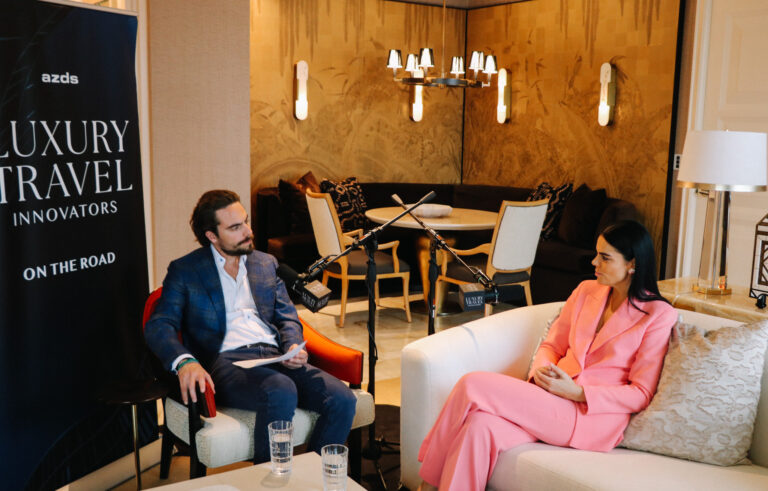
At this year’s ILTM Cannes, the conversation around luxury travel centered less on excess and more on evolution: slower journeys, deeper community, smarter storytelling, and experiences that reduce friction in increasingly busy lives. On this episode of Luxury Travel Innovators, I sat down with Paul Brady, News Director at Travel + Leisure to hear his perspective on the trends reshaping modern travel, from the continued rise of luxury cruising to the growing importance of trust and authenticity in media.
“Readers are craving authenticity. The more we can show that we have the receipts, the more that’s going to resonate.”
For Paul, one of the clearest signals from ILTM was the sustained momentum behind cruise, with demand continuing to climb rapidly, particularly in expedition and river cruising, as travelers increasingly prioritize convenience, immersion, and stress-free planning. The appeal is simple: unpack once, experience multiple destinations, and let someone else manage the logistics. What was once considered an older demographic’s style of travel is now attracting younger couples, friend groups, and multi-generational families alike.
River cruising, in particular, stands out as a category undergoing a transformation. Operators are introducing larger suites, elevated culinary programs, and more design-forward experiences that challenge outdated perceptions of compact cabins and traditional itineraries. At the same time, travelers are gravitating toward journeys that feel slower and more intentional, whether aboard a European river ship, a luxury rail experience like the Orient Express, or even private yacht charters inspired by a growing fascination with cinematic travel (possibly influenced by the mega-hit Bravo show “Below Deck”).
Another emerging theme that Paul highlights is the shift from privacy toward community. For years, luxury hospitality emphasized seclusion and exclusivity; now, hotels, ships, and resorts are increasingly designing spaces that encourage interaction among like-minded travelers. In an era where many people feel overwhelmed by information, work, and digital noise, travel is becoming not only an escape, but also a way to reconnect, both with destinations and with other people.
As News Director at Travel + Leisure, Paul’s role spans far beyond traditional print journalism. He oversees coverage across cruise, aviation, trains, airports, and broader travel trends, while helping the brand adapt to a rapidly changing media landscape. Rather than separating content into rigid “print,” “social,” or “digital” silos, he describes a strategy focused on storytelling first — identifying the best platform for each story, whether that’s a feature article, video, newsletter, podcast, or reader experience.
That evolution is especially important at a moment when audiences are increasingly skeptical of what they see online. Paul emphasizes that trust and authenticity are now some of the most valuable currencies in media. With AI-generated content and misinformation proliferating across the internet, audiences want reassurance that journalists actually visited a destination, experienced a hotel firsthand, or tested the itinerary they’re recommending. For a legacy brand like Travel + Leisure, maintaining that credibility is central to its identity.
AI, however, still plays a meaningful role behind the scenes. Paul explains that while T+L does not use AI to write stories or generate editorial content, the technology has become useful for streamlining workflows—scanning news trends, organizing large datasets, summarizing information, and surfacing insights more efficiently. In his view, AI works best as an operational tool rather than a replacement for human storytelling.
Our conversation also touches on aviation, an area where Paul acknowledged traveler frustration has grown significantly. Increasingly stressful airport experiences, operational delays, and inconsistent service has pushed many travelers toward premium cabins and upgraded airport experiences. Airlines like Singapore Airlines, Delta, and JSX stand out as examples of carriers investing in hospitality, comfort, and thoughtful service design.
To wrap up our conversation, I asked Paul LTI’s signature rapid fire questions. For personal travel, he is looking forward to a trip to Iceland and the Faroe Islands, a place he’s actually never been to, as well as Chile and Patagonia. Looking back to past days of travel, Paul remarks on the fact that we are actually living in the golden age of travel right now—it’s more safe, accessible, and affordable than ever. But in the spirit of the question, he says he hopes that a proper crossing of the Atlantic on a grand ocean liner, a la the Queen Mary, is an old school thing that should continue. Looking forward, the travel innovation that he’s really excited about is supersonic aviation.
Thank you, Paul, for joining me on this episode of Luxury Travel Innovators. The full episode is available to listen to and watch on Spotify, Apple Podcasts and Youtube.